
Introduction to the Preservation of Global Agricultural Product Exports: The Real Cost of Export Losses
As nature's purest source of sweetness and nutrition, fresh fruit has exerted a timeless allure across cultures throughout human history. To savor this natural indulgence at its peak freshness, Imperial Consort Yang Guifei of the Tang Dynasty dispatched fast relays of couriers to deliver fresh lychees across thousands of miles; the Song Dynasty poet Su Dongpo solaced his exile in Lingnan by enjoying "three hundred lychees a day"; and King Louis XIV of France constructed the famed Orangerie at the Palace of Versailles simply to taste fresh strawberries in the depths of winter.
Today, advanced cold chains, controlled atmosphere packaging, and global logistics have transformed these once-royal luxuries into everyday supermarket staples. Yet, behind this seamless global trade lies an immense hidden cost. Post-harvest loss remains an elusive "black hole" across the fresh produce supply chain. Transpiration-induced moisture loss, ethylene-driven ripening, and microbial invasion constantly degrade commercial value, frequently leading to total decay and crop disposal. Much like cultivating lasting relationships through meticulous attention to detail, successful export preservation relies on scalable, scientific protocols that stabilize quality over weeks of ocean transit—effectively "freezing" crop vitality at its most pristine moment.
Quantifying Produce Loss: Turning Waste into Marketable Value
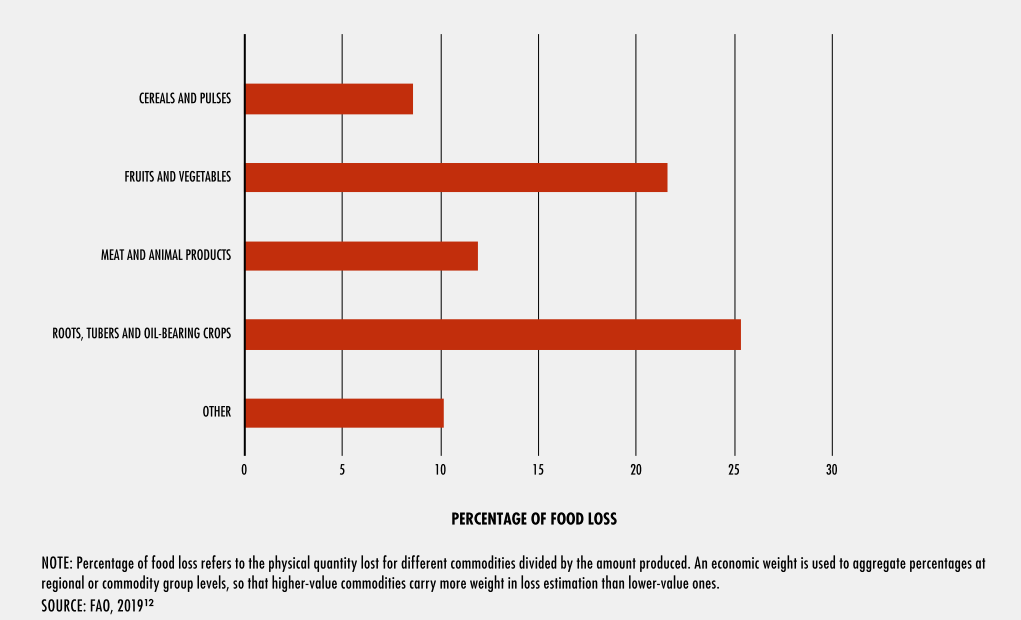
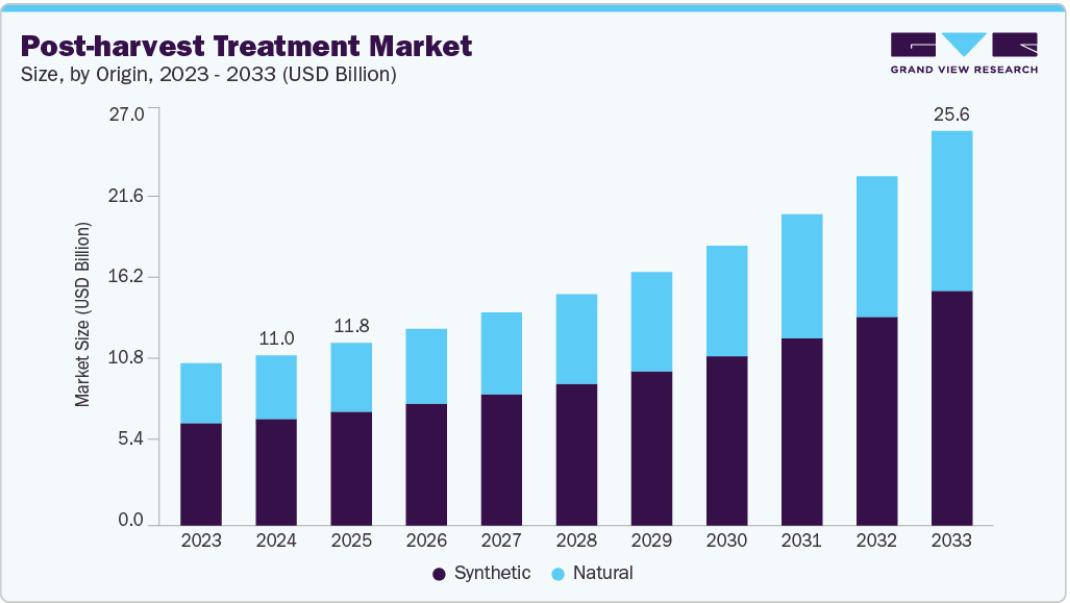
According to the Food and Agriculture Organization (FAO) State of Food and Agriculture 2019 report, physical loss for fruits and vegetables between the post-harvest and distribution stages exceeds 20% globally, underscoring that the post-harvest and logistics segments represent the most critical vulnerability in the value chain (Figure 1)1. Conversely, market research from firms like Grand View Research highlights rapid expansion in the global post-harvest treatment sector, reflecting an industry-wide pivot toward solutions that minimize loss and enhance arrival consistency (Figure 2)2.
For agricultural exporters, this technological wave offers value far beyond merely extending shelf life. It reclaims produce destined for compost or landfills and converts it back into saleable-grade, revenue-generating inventory. Systems like AnsiP® and LytoFresh® are engineered to reduce quality fluctuations through reproducible, science-based control points—transforming preservation from an operational expense into a strategic investment that secures order stability and global competitiveness.
The Primary Drivers of Post-Harvest Degradation
Achieving predictable, consistent quality across multi-week ocean shipments requires targeting the root biological mechanisms that compromise produce saleability: respiration and transpiration, environmental temperature fluctuations, ethylene-induced ripening, and microbial invasion.
1. Respiration and Transpiration (Moisture Loss)
Even after harvest, fruits and vegetables remain living organisms that consume stored carbohydrates and organic acids through respiration to sustain metabolic life, while transpiration causes continuous water loss. Elevated respiration rates rapidly deplete nutritional content and crispness. Transpiration not only causes skin shrinkage and elasticity loss but also results in physical weight loss—a direct hit to profit margins in weight-based, premium produce trade3.
2. Environmental Temperature Fluctuations
Temperature is the single most critical variable governing post-harvest physiology. Unstable ambient temperatures or breaks in the cold chain cause respiration rates to surge exponentially, accelerating energy depletion. Furthermore, severe temperature shifts induce condensation inside packaging, creating water damage and a fertile breeding ground for pathogens. While steady refrigeration slows metabolism, unmanaged cold chain gaps become gateways to supply chain loss4.
3. Ethylene-Induced Ripening (C₂H₄)
Ethylene (C₂H₄) is a naturally occurring gaseous plant hormone and the most lethal catalyst of premature aging during long-haul transit. In sealed shipping containers, ethylene acts autocatalytically: a single overripe fruit releasing ethylene can trigger systemic aging, softening, and discoloration across the entire container. This chain reaction swiftly converts wholesome food into food loss, making ethylene receptor inhibition a primary battleground in preservation science5.
4. Microbial Invasion
Harvesting compromises a plant's natural defenses, making post-harvest produce an ideal substrate for pathogens. During weeks of ocean transit, fungi and bacteria invade through microscopic harvest wounds or stem attachment sites. As respiration and ethylene metabolism spiral out of control and cell walls soften, pathogens proliferate rapidly, turning entire cartons into decayed, off-odor waste. This results not only in product disposal but also in costly customer claims that erode hard-won brand trust6.
The LytoFresh® Philosophy: A Systemic Supply Chain Approach
Mitigating respiration, temperature spikes, ethylene, and pathogens demonstrates that effective preservation cannot be achieved through a single standalone measure (such as refrigeration alone); it demands a comprehensive, integrated system.
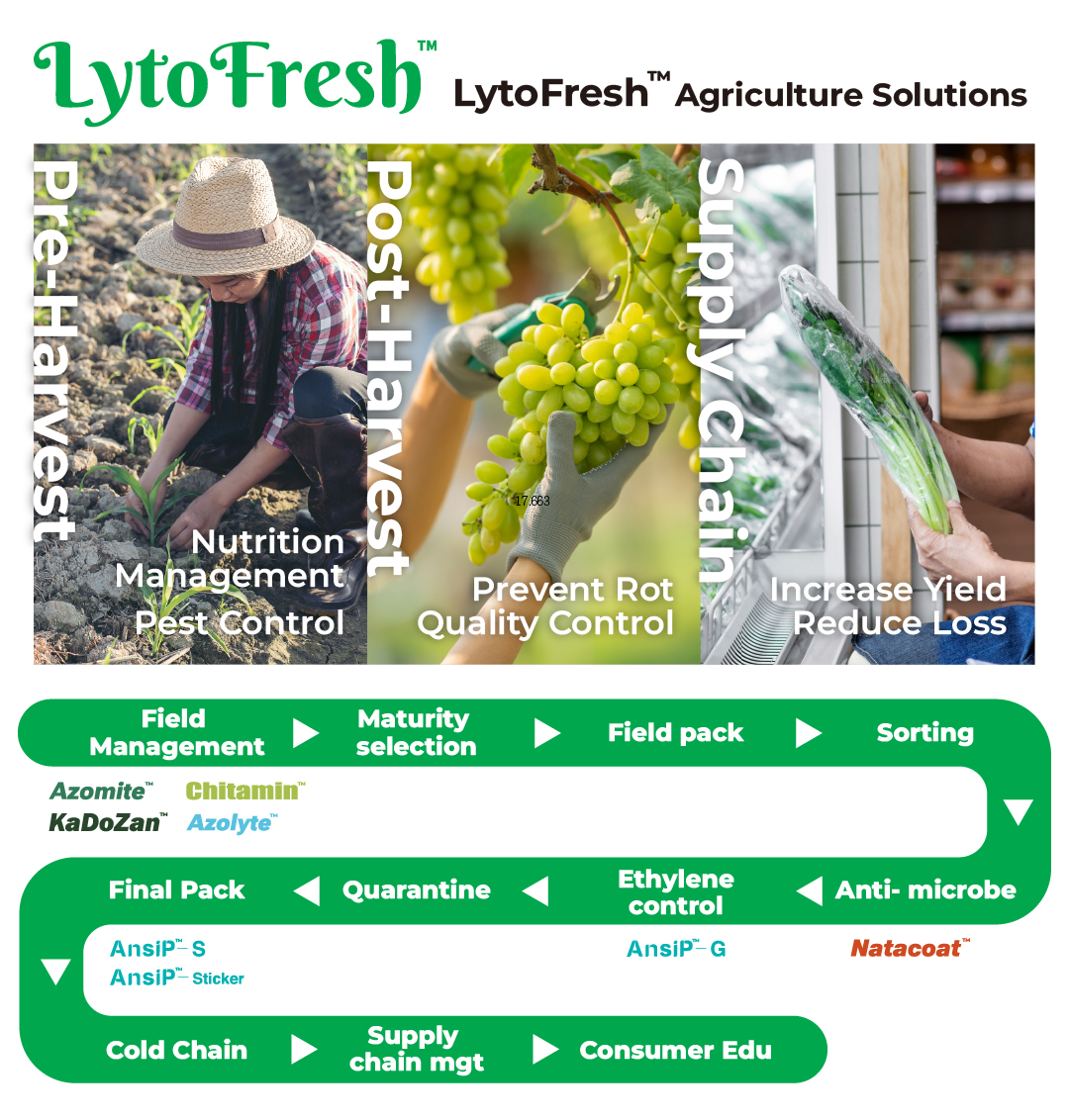
LytoFresh® is a holistic, cross-supply chain preservation management system (Figure 3):
Pre-Harvest Field Management: Fortifies crop physiology through targeted plant nutrition and field management, reducing post-harvest vulnerability.
Post-Harvest Intervention: Directly targets the two primary drivers of export failure—pathogens and ethylene—using anti-mold and ethylene-control strategies to mitigate decay and over-ripening risks.
Supply Chain Optimization: Integrates cold chain controls and process management to minimize quality fluctuations, turning potential scrap, downgrades, and customer complaints into higher saleable pack-outs and reliable export orders.
Scientific Evidence: Natacoat® and KaDoZan® in Action
Natacoat®: Reducing Transpiration and Skin Shrinkage in Export Mangoes
Extensive literature demonstrates that protective wax coatings effectively inhibit respiration rates and ethylene release in climacteric fruits (such as apples and pears), thereby delaying softening, preserving nutrient content, boosting antioxidant capacity, and significantly extending shelf life7.
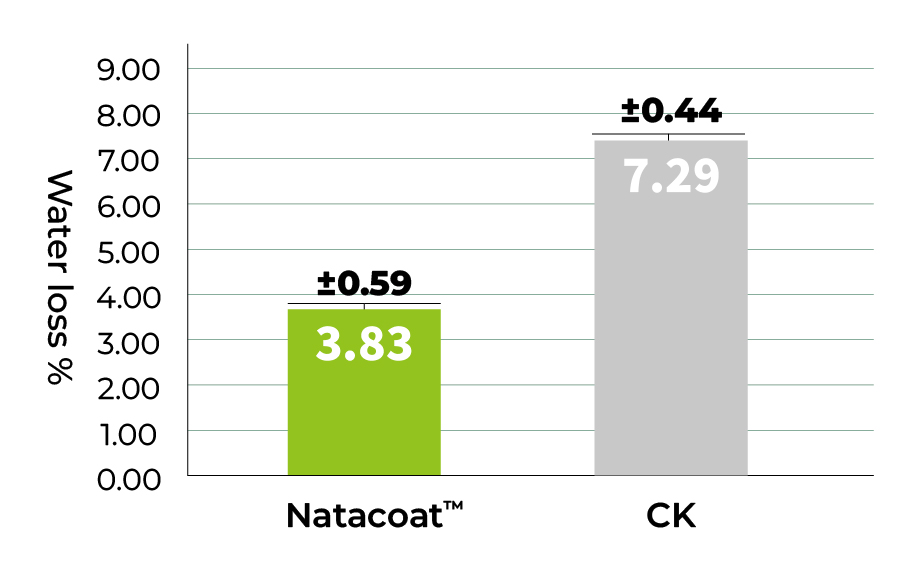
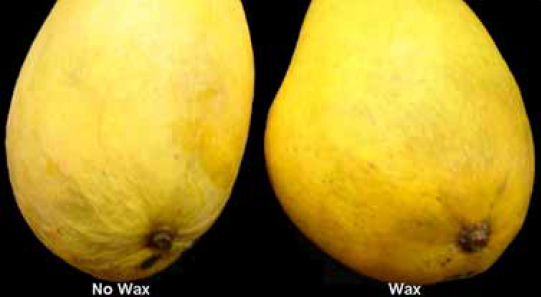
Natacoat® incorporates specialized natural wax emulsions to curb moisture loss. In Lytone’s simulated sea-freight trial transporting Jin-Hwang mangoes to Canada, Natacoat® significantly reduced water loss and preserved fruit quality. As shown in Table 1, the Natacoat® treatment group (WAX) reduced moisture loss by nearly 3 percentage points compared to the untreated control (no WAX). Figure 4 illustrates the marked visual contrast in peel shrinkage resulting from moisture loss across treatment groups.
KaDoZan®: Chitosan-Powered Bio-Protection Against Decay
Chitosan possesses dual functional mechanisms: inhibiting fungal pathogens while eliciting defense responses in host plants. By forming a protective semi-permeable film on produce surfaces, chitosan slows respiration rates and minimizes weight loss, serving as a safe, eco-friendly alternative to synthetic chemical fungicides8.
KaDoZan® leverages bioactive chitosan to enhance post-harvest resilience. In Lytone laboratory trials simulating Canadian ocean freight conditions (10°C for 26 days), KaDoZan® halved the incidence of fruit rot lesions, reducing affected fruit counts from 4 down to 2 (highlighted within the red dashed box).
References
- Food and Agriculture Organization of the United Nations (FAO). The State of Food and Agriculture 2019: Moving Forward on Food Loss and Waste Reduction; FAO: Rome, Italy, 2019.
- Grand View Research. Post-Harvest Treatment Market Size, Share & Trends Analysis Report, 2023–2033.
- Kader, A.A. Postharvest Technology of Horticultural Crops, 3rd ed.; University of California Agriculture and Natural Resources: Davis, CA, USA, 2002.
- Thompson, A.K. Controlled Atmosphere Storage of Fruits and Vegetables, 2nd ed.; CABI Publishing: Wallingford, UK, 2010.
- Watkins, C.B. The Use of 1-Methylcyclopropene (1-MCP) on Fruits and Vegetables. Biotechnology Advances 2006, 24, 389–409.
- Barkai-Golan, R. Postharvest Diseases of Fruits and Vegetables: Development and Control; Elsevier Science: Amsterdam, The Netherlands, 2001.
- Hassan, Z.H.; Lesmayati, S.; Qomariah, R.; Hasbianto, A. Effects of Wax Coating Applications on Quality and Shelf Life of Tropical Fruits. Postharvest Biology and Technology 2014, 92, 110–116.
- El Ghaouth, A.; Arul, J.; Ponnampalam, R.; Boulet, M. Use of Chitosan Coating to Reduce Water Loss and Maintain Quality of Cucumber and Bell Pepper Fruits. Journal of Food Processing and Preservation 1991, 15, 359–368.